





2026 Chevrolet Trax Portland OR
See which 2026 Chevrolet Trax models are available for your daily commute and city driving needs in Portland and Beaverton
Schedule a test drive to see which Trax trim matches your budget, technology preferences, and everyday driving habits
Call now to confirm availability and schedule your visit before your next work week or commute
| Sales | ||
| Day | Open | Closed |
| Monday | 8:30AM | 8:00PM |
| Tuesday | 8:30AM | 8:00PM |
| Wednesday | 8:30AM | 8:00PM |
| Thursday | 8:30AM | 8:00PM |
| Friday | 8:30AM | 8:00PM |
| Saturday | 8:30AM | 8:00PM |
| Sunday | 10:00AM | 7:00PM |
Is the 2026 Chevrolet Trax the right fit for commuting in Portland and Beaverton?
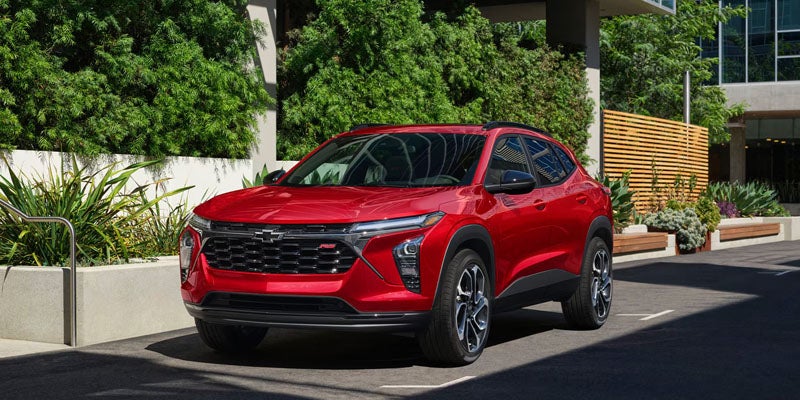
For many drivers in Portland and Beaverton, the question is not whether they want an SUV. It is whether they want one that feels practical every weekday. The 2026 Chevrolet Trax is a compact SUV aimed at shoppers who want everyday usability without stepping up to a larger vehicle that can feel harder to park, more expensive to own, or less efficient for regular commuting.
That is where the Trax makes the strongest case. It is built for drivers who want SUV ride height, flexible cargo space, and a straightforward daily-driving experience. In a market where some shoppers automatically move toward a larger crossover, the Trax gives buyers a reason to pause and ask whether they would benefit more from a vehicle that is easier to live with five or six days a week.
Daily driving matters more than max-size utility for many buyers
If your routine is built around traffic, office parking, errands, and routine local travel, a compact SUV can make more sense than a larger model. The Trax is designed around that kind of use. It gives buyers the elevated driving position and versatility they expect from an SUV, but in a format that is easier to place on crowded streets and easier to maneuver in tighter spaces.
That matters because commuting pressure adds up. A vehicle that feels simple to drive in traffic, practical to park, and manageable in mixed city and suburban routes can reduce daily friction in ways that are more valuable than extra size you rarely use. Buyers comparing the Trax to a larger SUV should weigh that tradeoff directly: more day-to-day ease versus more total vehicle footprint.
How easy is the Trax to manage in city traffic and tighter parking areas?
City driving is one of the clearest reasons shoppers look at the Trax. In Portland and nearby areas, daily driving often includes garages, neighborhood streets, parking lots, and heavier traffic flow where a smaller SUV can feel like the more practical choice.
The advantage here is straightforward. The Trax is easier to position than a larger crossover, which can help when merging, turning into tighter areas, or backing into spaces where a bulkier vehicle may feel less convenient. That does not make it the right fit for every buyer. Shoppers who consistently prioritize maximum passenger room or heavier-duty utility may still want to compare larger SUVs. But for drivers who mainly need confident, efficient daily use, the Trax can be the better-sized answer.
- Parking confidence: Buyers who regularly use garages, apartment parking, or tighter retail lots should evaluate whether compact size will improve daily convenience.
- Traffic comfort: A vehicle that feels easier to place in traffic can reduce fatigue across repeated weekday driving.
- Right-sized utility: The real decision is whether you need more SUV than your routine actually demands.
Does the Chevrolet Trax have enough room for errands, cargo, and daily flexibility?
Space concerns are common with compact SUVs, and they should be. Buyers are not just asking for cargo numbers. They are asking whether the vehicle will actually support groceries, work bags, family routines, and the smaller but constant demands of daily life.
The Trax is built to balance compact exterior size with usable interior flexibility. That makes it especially relevant for drivers who do not need full-size SUV capacity every day, but still want a vehicle that can adapt when plans change. The strongest fit is often for commuters, couples, first-time SUV buyers, or smaller households that want flexibility without carrying excess size around all week.
The tradeoff is simple. A larger SUV may give you more overall room, but the Trax may fit your real usage more efficiently. Buyers should evaluate how often they truly need maximum cargo or passenger space versus how often they would benefit from a smaller vehicle that is easier to manage every day.
Is the 2026 Chevrolet Trax a smart value decision for first-time and budget-focused buyers?
This is one of the most important questions on the page because budget-focused buyers are rarely deciding on price alone. They are deciding whether the vehicle feels sustainable to own. The Trax makes sense for shoppers who want SUV practicality without immediately moving into a larger, more expensive category.
That value shows up in several ways: approachable size, practical everyday utility, modern convenience expectations, and a layout that supports routine ownership rather than complexity for its own sake. For first-time buyers, that can mean a vehicle that feels easier to step into with confidence. For downsizing buyers, it can mean keeping SUV function while reducing the burden of driving and owning something larger than necessary.
Buyers should still compare trims carefully. The goal is not to chase the highest feature count. It is to identify which version supports your actual routine. If your priority is straightforward commuting, manageable ownership, and practical comfort, the Trax can deliver better value than a model that adds size or features without improving daily fit.
How well does the Trax match rainy Portland-area driving conditions?
Portland-area shoppers often are not asking whether a vehicle can drive in rain at all. They are asking whether it will feel composed, predictable, and confidence-inspiring during repeated wet commutes. That is a more useful question, and it is where the Trax’s everyday-driving focus matters.
For many drivers, wet-weather confidence comes from lower daily effort. A compact SUV that is easier to maneuver, easier to place in traffic, and easier to manage during reduced visibility can feel like a stronger commuter fit than a vehicle that simply offers more size. The Trax is best evaluated through that lens. It supports routine driving needs, not specialized severe-weather use.
That distinction matters. If your routine centers on urban commuting, suburban errands, and regular wet-road driving, the Trax may provide the right level of practicality and reassurance. If your driving regularly extends into mountain travel, heavier winter conditions, or situations where you specifically want a different drivetrain setup, that is where comparison-shopping becomes more important.
What should buyers compare before choosing a 2026 Chevrolet Trax?
The strongest Trax buyer is usually not looking for the biggest SUV in the segment. They are looking for the most sensible one for how they actually drive. That means the evaluation should stay grounded in routine rather than assumption.
- Commute pattern: How much of your week is spent in traffic, on local routes, or parking in tighter spaces?
- Space reality: Do you need occasional flexibility, or do you regularly need maximum cargo and passenger room?
- Ownership priorities: Are you trying to control overall cost and keep daily driving simple?
- Weather expectations: Will the vehicle mainly support wet commuting, or do you need capability for more demanding conditions?
When those questions point toward practicality, maneuverability, and everyday value, the 2026 Chevrolet Trax becomes a very strong match for Portland- and Beaverton-area drivers.
(Note: This article focuses on providing valuable information and does not mention specific pricing, for more information about financing and car buying, please reach out to our dealership.)